


1. Fish ambul thiyal (sour fish curry)
As you'd expect from an island in the Indian Ocean, seafood plays an important role in Sri Lankan cuisine.
Fish ambul thiyal (sour fish curry) is one of the most beloved varieties of the many different fish curries available.
The
fish -- usually something large and firm, such as tuna -- is cut into
cubes, then sauteed in a blend of

Perhaps the most important ingredient is dried goraka, a small fruit responsible for giving the fish a sour flavor.
Ambul
thiyal is a dry curry dish, meaning all the ingredients are simmered
with a small amount of water and cooked until the liquid reduces. This
allows the spice mixture to coat each cube of fish.
Originating
in southern Sri Lanka, it's available throughout the country at
restaurants that serve curry, and is best eaten with rice.
2. Kottu (also, kottu roti)
Over
the traffic and noise at a Sri Lankan market, you'll likely hear the
clanking of metal on metal and know kottu isn't far away.
Kottu is Sri Lanka's hamburger -- everybody's favorite go-to fast food when craving something tasty and

It resembles fried rice, except instead of rice, it's made with a type of roti known as godamba roti (a flat, crispy bread).
The roti is normally fried at the beginning of the day, piled into stacks and served as it's ordered.
When you place an order, the kottu chef will fry and chop the roti with a selection of ingredients you choose.
The result is a tasty mixture of salty pieces of fried dough, lightly spiced and extremely comforting.
Kottu is served with spicy curry sauce, which you can either use as a dip or pour over your entire plate.
Some
of the most skilled kottu chefs compose their own unique songs, singing
while they rhythmically clank their spatula and knives against the
metal frying surface, slicing the roti with each clank.
3. Kukul mas curry (chicken curry)
Sri Lanka has many variations of chicken curry.
Simple to make, chicken curry is a common household dish in Sri Lanka.
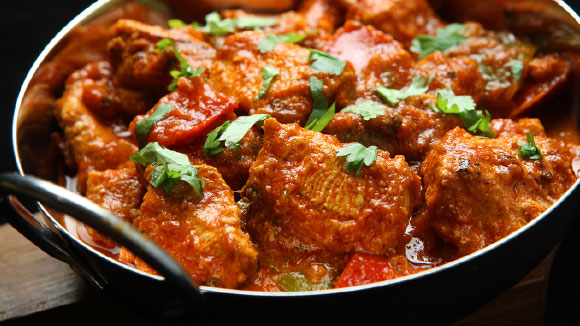
There are many variations depending on region and taste preferences.
Spices
like fennel seeds, cardamom, cloves and cinnamon sticks are tempered in
hot oil before being combined with chicken and spices like chili
powder, curry powder, turmeric, pandan leaves, lemongrass and curry
leaves.
Coconut milk contributes to the rich base of the curry gravy. Depending on the recipe, a puree of tomato is often included.
The chicken is stewed for an hour or so until the essence of the spices is infused into the chicken.
Most satisfying when served with hot rice and roti.
4. Parippu (dhal curry)
Parippu, or dhal curry, is the most common curry in all of Sri Lankan cuisine, a staple in any restaurant or household.
Masoor dhal (split red lentils) are first rinsed and boiled until soft.
In
a separate pan, a number of fresh ingredients, such as onions, tomatoes
and fresh green chilies, are sauteed and mixed with tempered spices
like cumin seeds, turmeric, fenugreek, mustard seeds and curry leaves.
All
the ingredients are combined and usually thickened with a splash of
fresh coconut milk to give the dhal a rich flavor and creamy texture.
It goes with everything, but is perfect as a dipping gravy for a fresh roti or paratha.
5. Lamprais
Sri Lanka has been influenced by a diversity of cultures and one of the most evident is the Dutch Burgher community.
Lamprais,
a word that combines the two Dutch words for "lump" and "rice," is a
combination of meat, rice

The rice is
cooked with meat stock -- usually a combination of different meats like
beef, pork or lamb -- that's infused with cardamom, clove and cinnamon.
A
scoop of rice is placed in the center of a banana leaf, along with the
mixed meat curry, two frikkadels (Dutch-style beef balls), blachan (a
shrimp paste) and a starch or vegetable, usually either ash plantain or
brinjals.
The package is folded into a parcel and steamed.
Since
lamprais is a Burgher contribution to Sri Lankan cuisine, the meat is
usually prepared with sweet spices like clove and cinnamon, recreating
the flavor favored by the Dutch Burgher community.
Original recipes called for beef, pork and lamb, but chicken and eggs are often included in a modern lamprais packet.
6. Hoppers (appa or appam) and string hoppers (indi appa or idiyappam)
Egg hopper, Sri Lanka's version of an "egg in the hole."
Hoppers are the Sri Lankan answer to the pancake.
The
batter is made from a slightly fermented concoction of rice flour,
coconut milk, sometimes coconut water
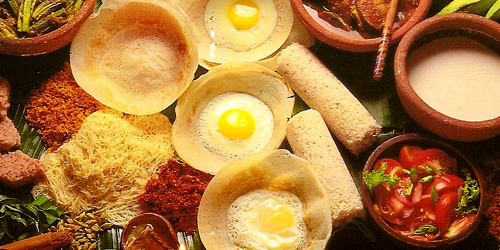
A ladle of batter is fried in a small wok and swirled around to even it out.
Hoppers
can be sweet or savory, but one of the local favorites is egg hoppers.
An egg is cracked into the bowl-shaped pancake, creating the Sri Lankan
version of an "egg in the hole."
Egg hoppers are garnished with lunu miris, a sambol of onions, chilies, lemon juice and salt.
Unlike the runny batter used for hoppers, string hoppers are made from a much thicker dough.
The dough is squeezed through a string hopper maker, like a pasta press, to create thin strands of noodles, which are steamed.
String hoppers are normally eaten for breakfast or dinner with curries.
7. Polos (green jackfruit curry)
Jackfruit is consumed in a number of different stages of ripeness, from very ripe and sweet to green and starchy.
Polos is a Sri Lankan curry prepared with young green jackfruit.
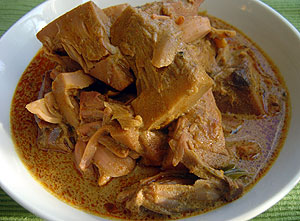
The fruit is sliced into bite-sized chunks and boiled until soft.
It's
then cooked with onions, garlic, ginger and spices like mustard seeds,
turmeric, chili powder, roasted curry powder, pandan leaves and curry
leaf sprigs.
The final step is to add
coconut milk and simmer to reduce most of the liquid, leaving all the
beautiful flavors within the cubes of jackfruit.
Jackfruit has a starchy texture, somewhat similar to cassava or potato.
Polos is a standard dish available at most Sri Lankan curry restaurants.
8. Wambatu moju (eggplant/brinjals pickle)
Served mostly with rice and curries, wambatu moju is an extremely flavorful candied eggplant (brinjals)
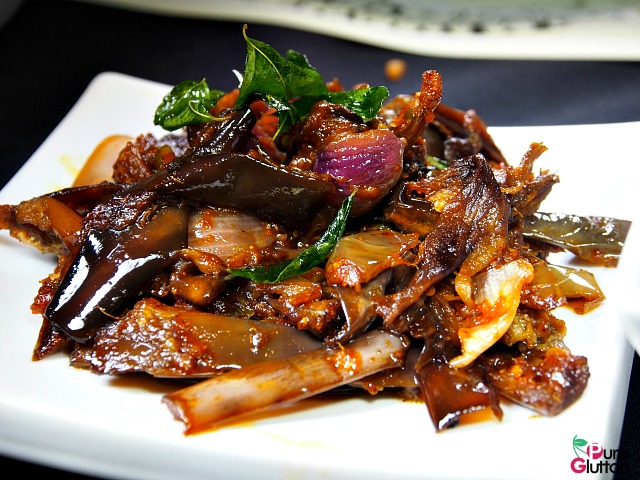
The
eggplant -- usually the purple-skinned, long and slender variety -- is
cut into bite-sized wedges and deep fried, giving the eggplant a crispy
texture with a soft and silky interior.
It's
then caramelized with a spoon of sugar, vinegar, red onions, green
chilies, mustard seeds, chili powder and a hint of turmeric powder until
the color turns almost black.
Take a
bite and the soft and juicy texture of the eggplant should melt in your
mouth -- the slightly sweet, sour and salty contrast is absolutely
sensational.
9. Gotu kola sambol (pennywort salad)
Gotu kola, or Asiatic pennywort, is a popular medicinal herb.
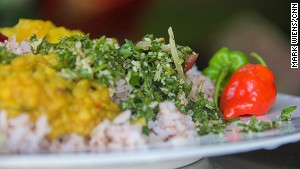 One of the most readily available green vegetable dishes in Sri Lanka is gotu kola sambol.
Gotu kola (known in English as Asiatic pennywort) is a medicinal herb in Asia.
It's
shredded into slivers, then combined with shallots, tomatoes, fresh
grated coconut and chili and seasoned with a dressing of salt, pepper
and lemon juice.
Sambol is a term used
in Sri Lanka for ingredients that are combined and eaten raw, sometimes
more of a chili sauce and sometimes more of a salad, like gotu kola
sambol.
Gotu kola has a powerful, herbaceous flavor similar to kale, making it an extremely fresh and crisp dish.
It's typically a side dish served with curry and rice.
10. Kiribath with lunu miris
Kiribath
is a special type of rice, cooked with thick coconut milk and often
served during special or auspicious occasions, such as Sinhalese New
Year.
There are a few versions of kiribath, but the basic procedure is to start by boiling a pot of rice.

Before
the rice finishes cooking, add coconut milk and a pinch of salt. The
coconut milk makes the rice creamy and rich and helps it form a sticky
consistency.
Once the rice is finished cooking, it's cut into wedges and served like slices of cake.
Kiribath
can be eaten along with a number of different Sri Lankan dishes, often
either sweetened with jaggery or consumed salty with chili sauce or
curry.
One of the most common ways to
garnish kiribath is with lunu miris, a sambol chili sauce made from red
chilies, onions, lemon juice, salt and sometimes dry Maldive fish, all
ground into a paste using a stone mortar and pestle.
11. Pol Sambol (coconut relish)
In a country in which the coconut is of supreme importance, there's one Sri Lankan side dish that pays fitting
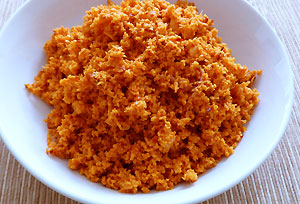
Pol
sambol, which might also be called fresh coconut relish, is a simple
blend of finely grated coconut, red onions, dried whole chilies or chili
powder, lime juice, salt and Maldive fish (if available).
The ingredients are diced or ground, then combined in a bowl.
In Sri Lanka, pol sambol is used as a garnish or side dish for everything and anything.
It
goes well with rice and curry, pol roti (coconut roti), a hot paratha,
string hoppers or even just scooped up with slices of bread.
If you love coconut, there's no better garnish in the world.
12. Wood apple
It wouldn't be a Sri Lankan food discussion without wood apple.
The
wood apple is a Southeast Asian fruit about the size of a de-husked
coconut. It also has just as hard of a shell, and a pungent, almost blue
cheese aroma.
Walking through a market in Sri Lanka your nose will detect it long before your eyes do.

Inside the shell is a dark brown paste that resembles something between tamarind pulp and fermented raisins.
Wood
apple can be eaten directly out of the shell, but one of the most
popular ways to eat (or drink) it throughout Sri Lanka is in a thick
smoothie, known as wood apple juice.
The fruit is blended with jaggery (or sugar) and water to smooth it out.
It has a unique sour and sweet flavor.
Mention that you love wood apple to any Sri Lankan you meet, and they probably won't be able to hold back a knowing smile.


